Unveiling the Aspen Age Trap: Looks Good, Hunts Empty
Part 2 of Grouse Don’t Read Maps. But You Should.
Ann Jandernoa
July 1, 2025
You’re studying a map, spotting a patch labeled “aspen” with dense, promising edges. It seems like a perfect grouse cover. So you drop a pin on it to check it out when you are in the area.
But when you arrive, it’s a disappointment. It’s too open, lots of weeds and no shrub component thus a sparse understory. There’s not a bird in sight. The cut is clearly older than it appeared in the imagery. Welcome to the Aspen Age Trap. Hunters often fall for it, assuming an “aspen” label guarantees prime habitat. It doesn’t. Aspen cover is not one-size-fits-all. Here’s why.
The Truth About Grouse Cover
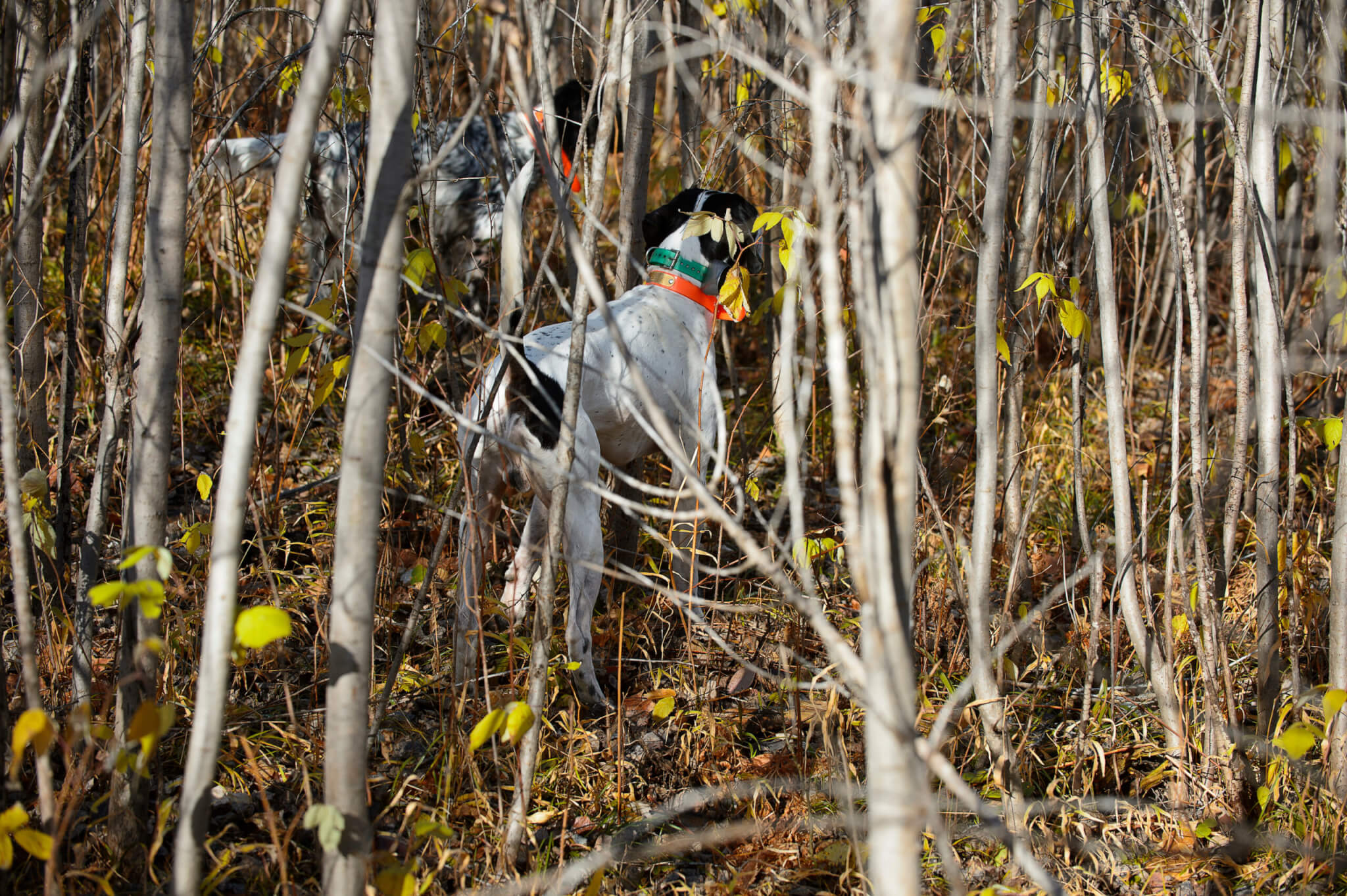
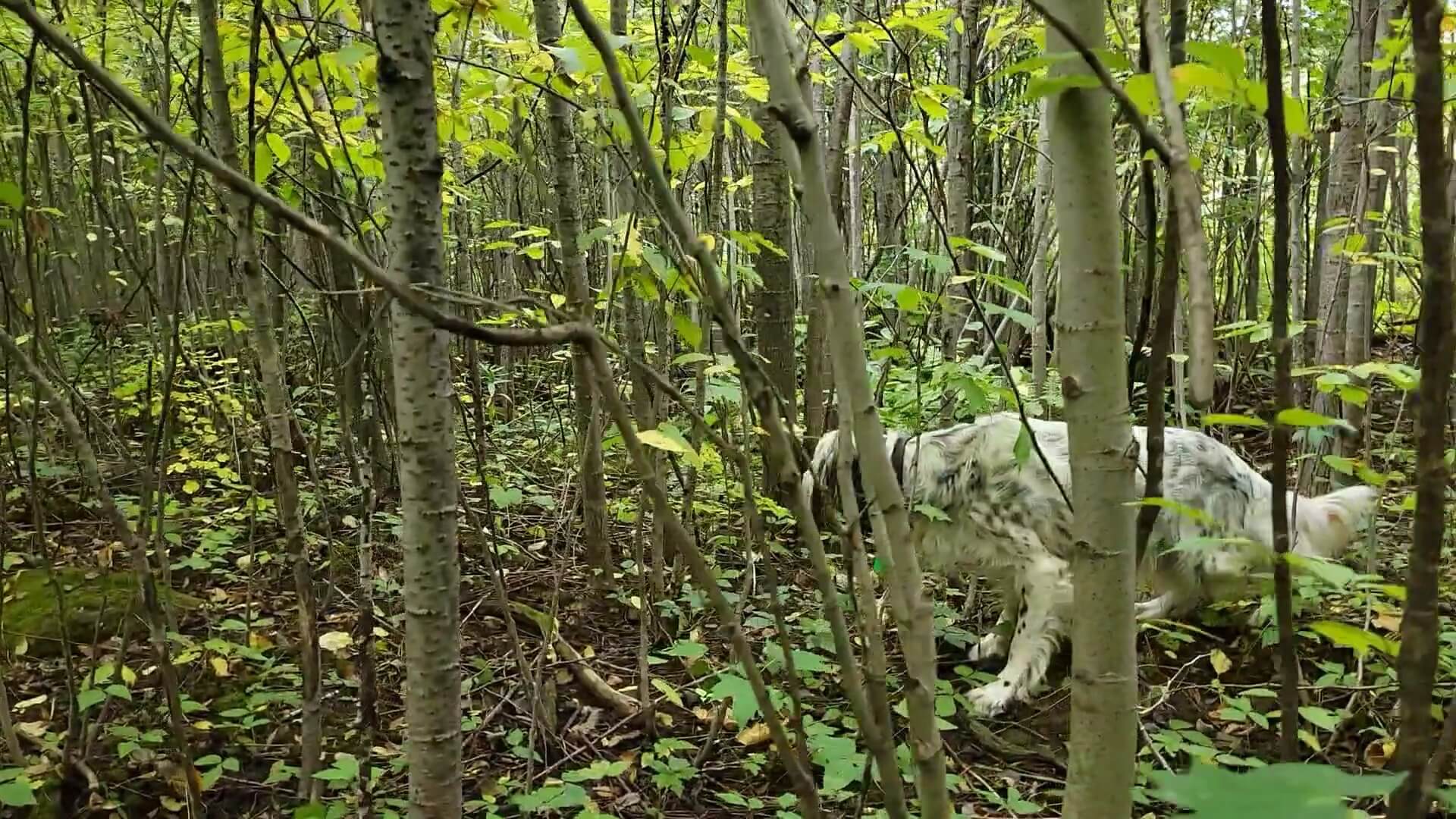
A map’s “aspen” label doesn’t tell you what ruffed grouse need: the right structure, age and usability. Age shapes canopy structure, which drives stem density. This, in turn, creates the dense overhead canopy that fosters a ground cover ideal for grouse. It provides protection, brood-rearing space and food lush salad sources for adult grouse as well as the needed protein of insects for early grouse chick development.
Grouse thrive in a narrow age band where the forest is dense yet canopy thick enough for protection and specific plant development and offers avian protection, but this sweet spot is rare. Forest inventory models show that less than 4% of forests meet these criteria at any given time.
Gordon Gullion (1977), a one leading ruffed grouse habitat expert, noted: “The optimum condition for ruffed grouse exists in aspen stands between 6 and 15 years of age. These stands are dense with young growth, producing both cover and food sources.”
– Gullion, G.W., Forest Habitat Management for Ruffed Grouse
However, Gullion’s research was conducted in one of the best aspen regions in the country, so this 6–15-year range is based on “Prime” soil conditions.
Thus, indicating that other regions with less favorable soils or differences in successional timber types will vary some in their relationship to “Prime” grouse stand age brackets.
In much of the Midwest, a six-year-old cut is often too “trashy,” with debris that can injure dogs or hunters. These young cuts may hold woodcock but are rarely grouse ready. Whole-tree chipping can speed up the process, but traditional logging on varied soil takes longer, delaying usability.
Age Drives Quality and That Window Shifts
Not all young forests are grouse friendly. Quality habitat evolves after a timber harvest, and its lifespan hinges on age, shaped by regional and site-specific factors.
Aspen stands regenerate quickly, but they aren’t grouse-ready right away. For the first 5–6 years, they’re too sparse, lacking the stem density and canopy closure grouse need. By years 7–9, the cover thickens, the understory flourishes, and insects thrive, providing food critical for young grouse wing development. The sweet spot—typically years 9–12 in prime aspen regions—offers dense stems, diverse structure, and ideal cover. On better soils, some cuts may remain prime up to 15 years.
This window shifts based on several factors:
–Soil variability: Some areas within a cut regenerate quickly, while others lag.
-Drainage differences: Wet pockets stagnate, while dry ridges develop faster or become stagnant in growth during droughts.
–Weather history: Wet logging conditions, droughts, or heavy snowpacks can shift growth by 1–2 years.
–Slash breakdown: Logging debris must decompose before the understory becomes accessible for broods and movement.
– Region and tree species: Gullion’s 6–15-year range reflects optimal aspen conditions, but in regions with different dominant species like Sugar Maple, Oak, the prime age range may shift earlier or later. You’re not just looking for a “young forest.” You need a stand where at least 75% is in usable condition—dense, well-structured, with a interwoven canopy cover. On rich, well-drained soils with minimal slash, prime use may begin as early as year 6 or 7. On marginal or uneven ground, the peak may not arrive until year 9–10 and may fade quickly. Slash-heavy cuts can take 2–3 extra years to become grouse-ready.
Gullion emphasized:
“There is a narrow window when aspen stands are structurally suitable for grouse. Too young, and they’re open. Too old, and the structure is lost. The value is in the middle.”
Why the Harvest Date Is Your Anchor
It all starts with the harvest date. Without knowing when a stand was cut, you can’t assess its potential as productive cover. That date is your starting point. From there, it’s boots on the ground to evaluate:
-Canopy Structure
-Density
-Depending on the age Shrub component
-Soil conditions
-Slash decomposition
-Ground-level structure
-Favorable edges
-Interior Escape Pocket
-Lower Edge Quality
Final Thoughts
If you know the harvest age, you can predict the potential habitat quality. That’s the starting point and everything else builds from there.
Without that date, you’re guessing. And in grouse habitat, being off by even a year or two could mean walking into marginal cover, burning time, and flushing fewer birds.
Prime cover is a moving target, you either know when the window opens, or you’re already too late.
Grouse don’t chase labels. They follow structure, canopy, stem density, and floor vegetation, which in turn are the defining qualities that can only be truly judged by knowing when the stand’s age, not just that it says ‘aspen’ on the map.
In 20 years of guiding, I’ve seen it time and again: The birds don’t read the labels — they read the cover.
Grouse have very specific habitat needs.
Get the age wrong, and the hunt’s over before it starts because it all boils down to habitat quality, and that istied directly to when the cut was harvested.
Dr. Gordon W. Gullion: The Biologist Who Defined Grouse Habitat
Dr. Gordon W. Gullion (1921–1991) was one of North America’s most respected wildlife biologists and remains the most influential figure in the science of ruffed grouse ecology. His research permanently changed how we manage forests for game birds, establishing age structure and forest succession as the cornerstones of productive habitat.
While many talked about cover in broad terms, Gullion broke it down with precision: grouse don’t just need “aspen” — they need aspen of a specific age, on the right soil, with the right structure. He conducted most of his research in Minnesota, particularly at the Cloquet Forestry Center (operated by the University of Minnesota) and the Cutfoot Experimental Forest in the Chippewa National Forest. These landscapes provided the setting for decades of detailed study on how aspen stands develop — and when they become valuable to wildlife.
Gullion wasn’t just a scientist; he was also an avid grouse hunter. That firsthand experience in the woods gave his work a practical edge. He wasn’t modeling theory — he was chasing birds, watching habitat change, and tying real-world results back to hard data. His insights came from the ground up.
His most influential works include:
-“Managing Northern Forests for Wildlife” (1984), a technical publication that’s still considered essential reading for habitat managers.
-“Grouse of the North Shore”, later revised and republished as “The Ruffed Grouse”, which captured his field knowledge and observations in a more narrative form.
From his work, we learned that grouse use a narrow window of young aspen, typically between 6 and 15 years old, depending on soil, drainage, slash decay, and weather patterns. He showed that prime cover doesn’t last long — and that stand age is the single best predictor of habitat quality. Dr. Gullion earned his Ph.D. from the University of California, Berkeley, and brought academic discipline to a field often dominated by anecdote. Yet his legacy is just as strong among boots-on-the-ground hunters and landowners. He bridged the gap between science and the field.
If you’ve ever flushed a grouse in a young aspen stand, odds are you’ve benefited from Gullion’s work — whether you knew it or not.