Tick Myths Every Hunter Should Stop Believing
"An ounce of prevention is worth a pound of cure."
Ann Jandernoa
July 1, 2026
For many of us, ticks have become an accepted part of hunting. Years ago, finding one or two ticks on your dog during the season wasn’t unusual. Today, it’s not uncommon for a hunting dog to pick up dozens in a single afternoon. Along with those ticks comes the increasing risk of diseases that can affect both you and your hunting partner.
Unfortunately, there is almost as much misinformation about ticks as there are ticks themselves. Some of these myths have been passed down for generations, while others have spread through social media or conversations around the tailgate after a hunt. The problem is simple: believing misinformation can put both you and your dog at greater risk.
Let’s separate fact from fiction.

Myth #1: Ticks Fall Out of Trees
Reality
This is probably the oldest tick myth still circulating.
Ticks don’t spend their time high in trees waiting to drop onto passing hunters or dogs. Instead, they climb onto grass, weeds, brushes, young saplings, and other low vegetation where they wait with their front legs extended, a behavior called questing. As you or your dog brushes against that vegetation, the tick simply grabs on. If you’re walking through alder edges, young timber, old logging roads, CRP fields, or knee-high grass, you’re walking through prime tick habitat.
Takeaway
Look down, not up. Most ticks are waiting only inches above the ground.
Myth #2: Snow Means Tick Season Is Over
Reality
Many hunters still believe the first snowfall marks the end of tick season. Years ago, that was often closer to the truth. Today’s winters are different. Frequent warm spells have allowed many tick species, especially blacklegged (deer) ticks, to remain active whenever temperatures climb to around 40°F.
It doesn’t take spring. Sometimes it only takes one warm afternoon in January or February.
Ticks Don’t Depend on Deer Alone
Many hunters believe deer are responsible for all tick populations.
While deer are important hosts for adult ticks, they are only one part of the story.
Ticks also feed on:
-Mice
-Voles
-Squirrels
-Rabbits
-Birds
-Raccoons
-Foxes
-Coyotes
-Opossums
-Numerous other wildlife species
Because ticks have so many hosts available, reducing deer numbers alone will never eliminate tick problems.
Don’t Forget the Kennel
Winter exposure doesn’t always begin in the woods. One often-overlooked source is the straw placed inside dog houses.
Straw harvested from fields can occasionally contain ticks. Cold temperatures may keep those ticks inactive, but once the straw is placed in a warm doghouse, your dog’s body heat may encourage them to become active and begin searching for a host.
This doesn’t mean you should stop using straw. In my opinion, straw remains one of the best bedding materials available for outdoor hunting dogs during winter. It simply reminds us that tick exposure doesn’t always happen during a hunt.
Why Year-Round Protection Makes Sense
Years ago, many hunters stopped tick prevention during the winter.
Today, that practice is becoming less common.
Many veterinarians now recommend year-round tick prevention, particularly for hunting dogs that spend time in timber, CRP fields, brush, and other natural covers. The weather, not the calendar, now determines when ticks become active. Continue checking your dog throughout the winter. One warm day can be enough for ticks to become active.
Takeaway
Ticks don’t follow the calendar; they follow favorable conditions.
Myth #3: You Only Get Ticks in the Woods
Reality
Many hunters are surprised to discover they picked up a tick without ever stepping into a forest.
Ticks thrive in:
-Tall grass and brush
-Field and cut edges
-Fence rows
-Brushy roadsides
-CRP fields
-Parks
-Hiking trails
-Pastures
-Even your own backyard
Sometimes the short walk from your truck to the woods is enough.
Takeaway
Tick habitat exists anywhere wildlife and suitable vegetation overlaps.
Myth #4: Dogs With Short Hair Don’t Get as Many Ticks
Reality
A short coat doesn’t prevent ticks from attaching. The only real difference is that ticks are easier to find on short-haired dogs. Long-haired breeds simply hide them better.
Every hunting dog deserves a thorough inspection after every hunt, regardless of coat length.
Checking Your Dog Doesn’t Have to Be Complicated
One of the handiest tools you can keep in your truck, dog trailer, or kennel is a FURminator® de-shedding comb or a quality fine-toothed tick comb.
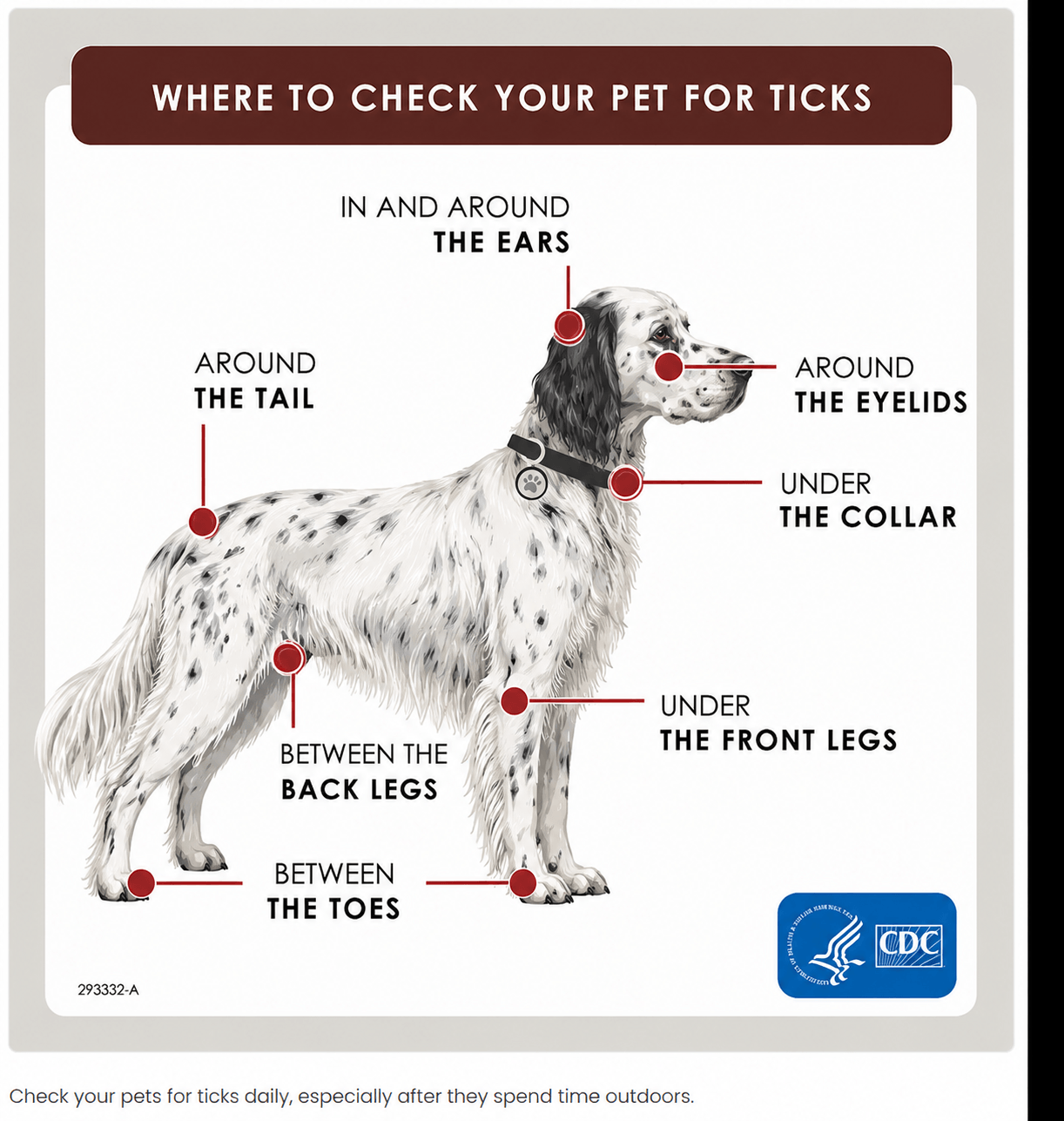
These tools don’t replace a hands-on inspection, but they do an excellent job of separating the coat hair and exposing ticks that might otherwise remain hidden. Before loading your dog into the truck, spend a few minutes checking:
-Around the ears
-Neck
-Chest
-Armpits
-Belly
-Groin
-Between the toes
-Under the collar
-Around the tail
Hunter’s Tick Kit
Keep these items together.
-FURminator® or similar de-shedding comb
-Fine-toothed tick comb
-Tick removal tool or fine-point tweezers
-Disposable gloves
-Small sealable container for saving ticks if identification becomes necessary
-Flashlight or headlamp
Check your dog before loading them into the truck. You’ll often catch unattached ticks before they ride home with you.
Takeaway
Short hair doesn’t stop ticks. Consistent inspections do.
Myth #5: If I Don’t See a Tick, I Wasn’t Bitten
Reality
Many ticks are incredibly small.
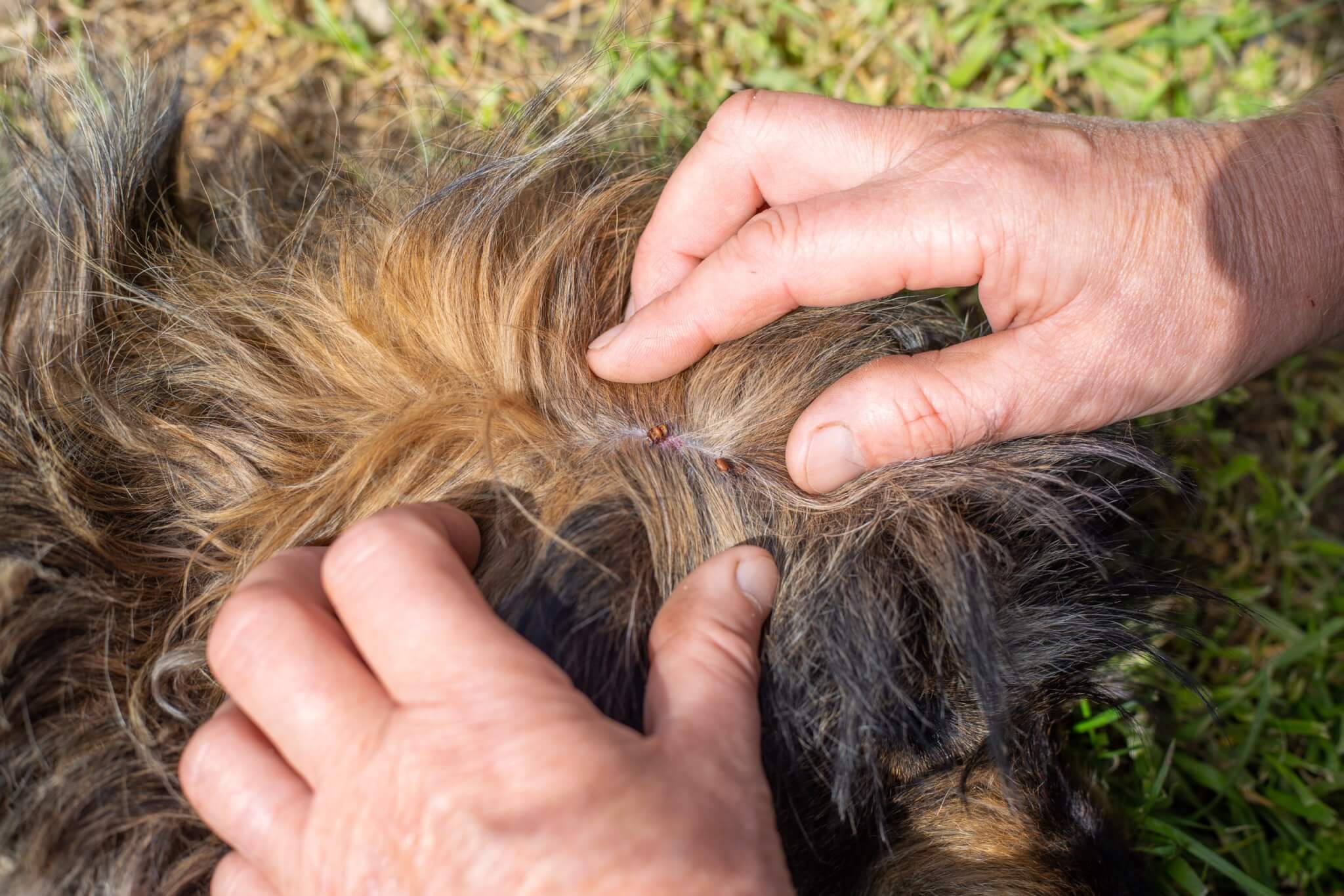
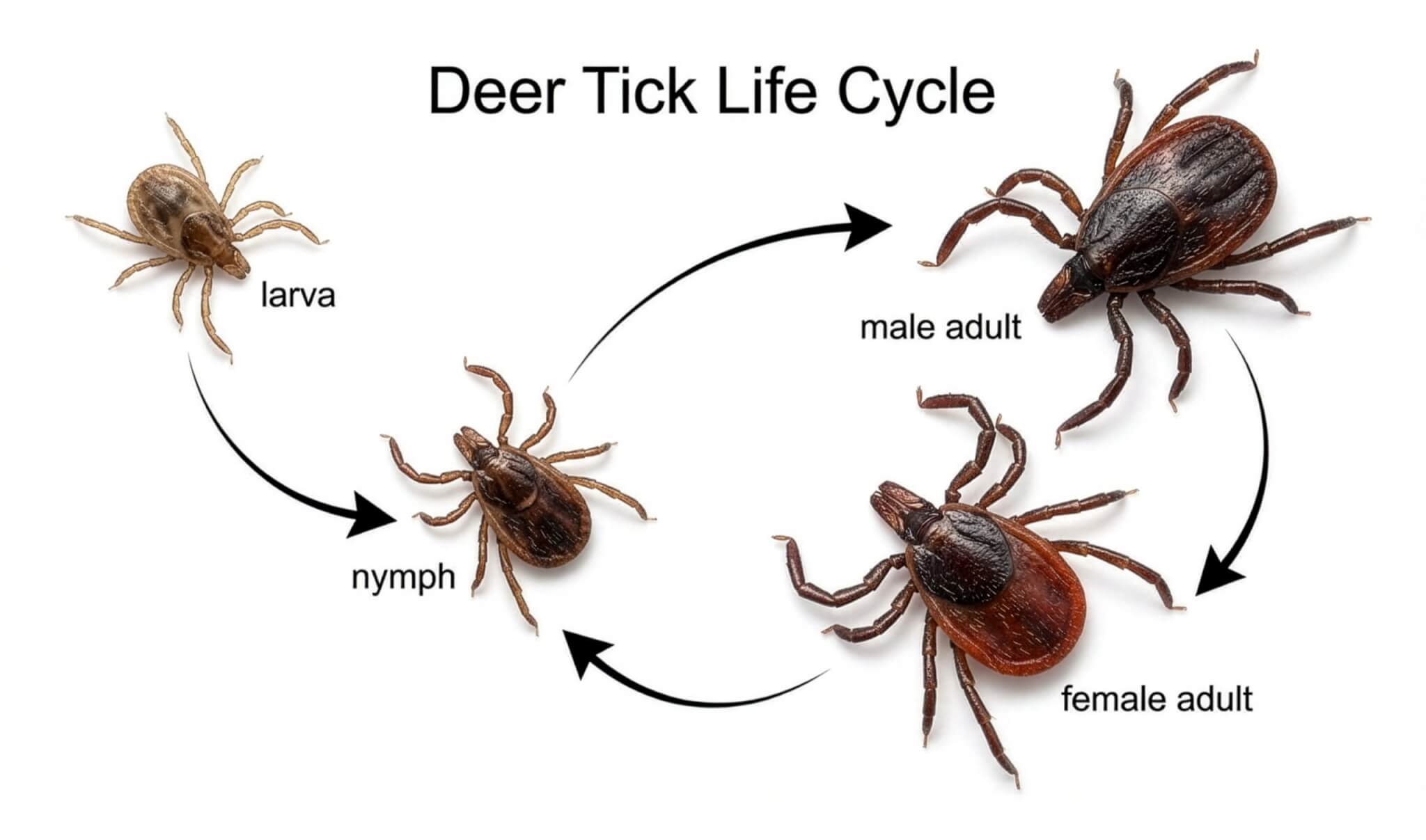
Immature nymphs can be no larger than a poppy seed and often attach in places that are easy to overlook.
Never assume your dog, or you, are tick-free simply because you didn’t immediately find one.
Takeaway
The smallest ticks are often the easiest to miss.
Myth #6: Tick Products Mean I Don’t Have to Check My Dog
Reality
No flea or tick products provide 100 percent protection. Preventatives are designed to reduce risk, not eliminate it. For me, prevention is only one part of the program.
My Tick Prevention Routine
After years of guiding and owning hunting dogs, I’ve settled on a routine that has worked well for me.
I use a veterinarian-recommended oral tick preventative together with a Seresto® collar.
That combination has provided excellent protection for my dogs over the years. Even so, I never assume any product is perfect.
Whenever I place a new collar on a dog, I watch that dog closely during the first several days. Just as people can react differently to medications, dogs can occasionally have individual sensitivities to flea and tick products.
If I notice anything unusual, I remove the collar and contact my veterinarian. People often ask why I don’t use additional sprays.
The answer is simple.
Being around agriculture, I watched farmers work around chemicals every day, many without protection. Those experiences left a lasting impression on me and shaped how I think about chemical exposure.
Because of that, I’ve always believed in using the least amount of chemicals necessary while still protecting my dogs. For me, an oral preventative, a Seresto® collar, and a careful hands-on inspection after every hunt have proven to be a system I trust.
That doesn’t mean sprays don’t have a place. Some hunters prefer using a field spray instead of a collar. If that’s your choice, take a few extra minutes to apply it correctly. Never spray directly toward your dog’s face or eyes. It could cause blindness depending on the amount of spray you get in the dogs’ eyes.
Most tick, mosquito, and fly sprays specifically warn users to avoid contact with the eyes. These products are intended for the coat, not the eyes. Serious eye injury can occur if the spray gets into the eyes.
Instead, spray the product onto a microfiber, wash mitt and wipe it through the coat.
Using a mitt has several advantages.
-It spreads the product into a thin, even layer rather than concentrating it in one area.
-It gives you much better control around their face.
-It greatly reduces the chance of accidentally getting spray into the eyes, nose, or mouth.
-You’re already running your hands over the dog, making it easy to check for ticks, burrs, cuts, sore pads, or skin problems.
-Many dogs tolerate being wiped down much better than being sprayed directly.
The goal isn’t to soak your dog. The goal is to apply a light, even coating while avoiding sensitive areas.
Remember that some field sprays also require the product to dry before the dog enters the field. Always read and follow the manufacturer’s directions. No medication, collar, or spray replaces a careful tick inspection after every hunt.
Takeaway
The best tick prevention program isn’t necessarily the one with the most products. It’s the one that safely and consistently protects your dog.
Myth #7: Lyme Disease Is the Only Disease Ticks Carry
Reality
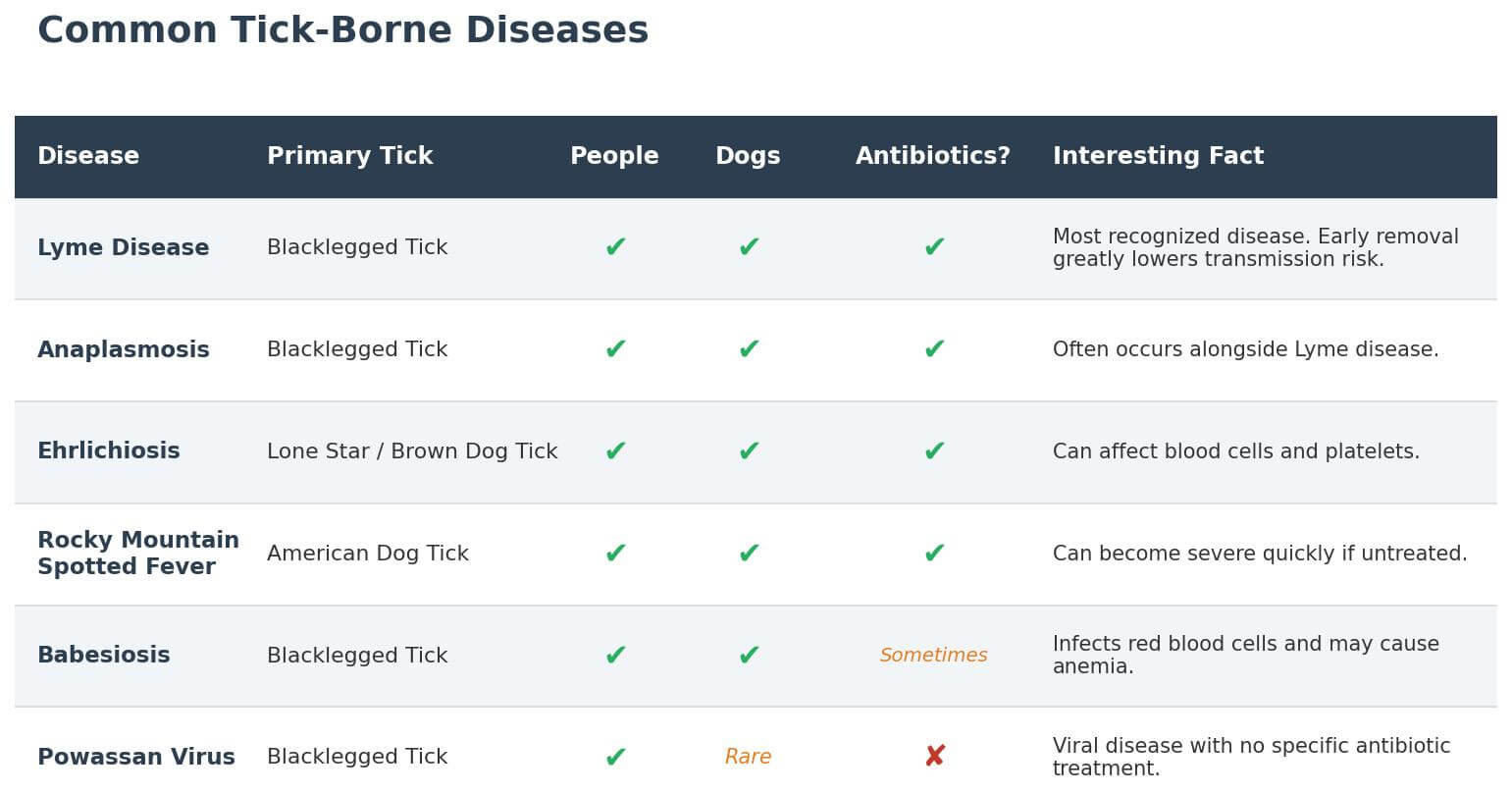
Lyme disease receives the most attention, but it is only one of several illnesses that ticks can transmit.
Some diseases attack the joints. Others attack blood cells. Some affect the nervous system. while others become serious within only a few hours or days. (the black legged tic is also known as the deer tick)
Common Tick-Borne Diseases
Takeaway
One tick may carry more than one disease. Learn which diseases occur where you hunt.
Myth #8: Removing a Tick Quickly Means There’s No Chance of Disease
Reality
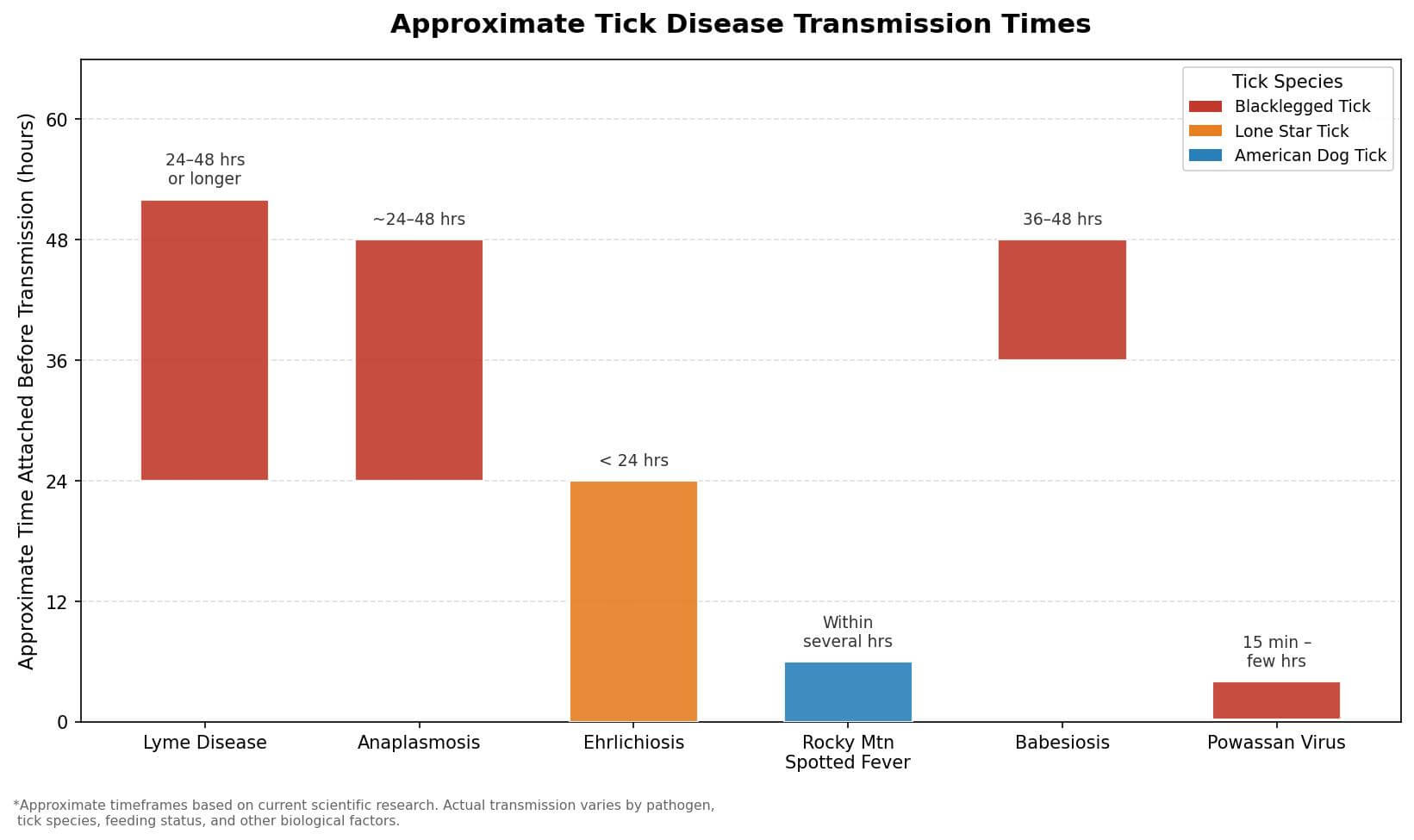
Removing a tick immediately is one of the best things you can do—but it doesn’t guarantee disease transmission hasn’t already occurred.
Different diseases require different attachment times. Some require many hours. Others may be transmitted much sooner. The safest approach is simple. Remove every tick as soon as you find it.
Approximate Tick Disease Transmission Times
Takeaway
Every minute matters. Remove ticks immediately and continue monitoring both yourself and your hunting dog.
Building Your Tick Prevention Program
By now, you’ve probably realized there isn’t a single product that eliminates every tick or every tick-borne disease.
The goal isn’t to make you or your dog tick-proof.
The goal is to reduce your risk by combining several simple layers of protection that work together.
Taking Care of Yourself
Your tick prevention program begins before you ever leave the truck.
Wear long pants whenever practical and consider light-colored clothing during heavy tick season to make crawling ticks easier to spot.
If you’re hunting thick cover, gaiters are one of the best investments you can make. They help keep ticks from reaching your pant legs while also keeping burrs, seeds, and debris out of your boots.
Treat your boots, gaiters, hunting pants, vest, and other hunting clothing with a permethrin clothing treatment according to the manufacturer’s directions. Never apply permethrin directly to your skin.
For exposed skin, use an EPA-registered insect repellent according to the product label.
Before climbing back into your truck, take two minutes to check yourself and your clothing. Many ticks are still crawling and haven’t attached yet. Finding them before they ride home with you is one of the easiest ways to prevent a tick bite.
Once you’re home, shower as soon as practical and place your hunting clothes in a hot dryer before washing if you suspect ticks may be present.
Your truck can become one of the easiest ways to transport ticks from one hunt to the next. Make a quick inspection of your routine before opening the door.
Taking Care of Your Hunting Dog
Your hunting dog spends far more time in heavy cover than you do, making a good prevention program just as important as good training.
Choosing an Oral Tick Preventative
Many hunters assume all oral tick medications are the same. They aren’t.
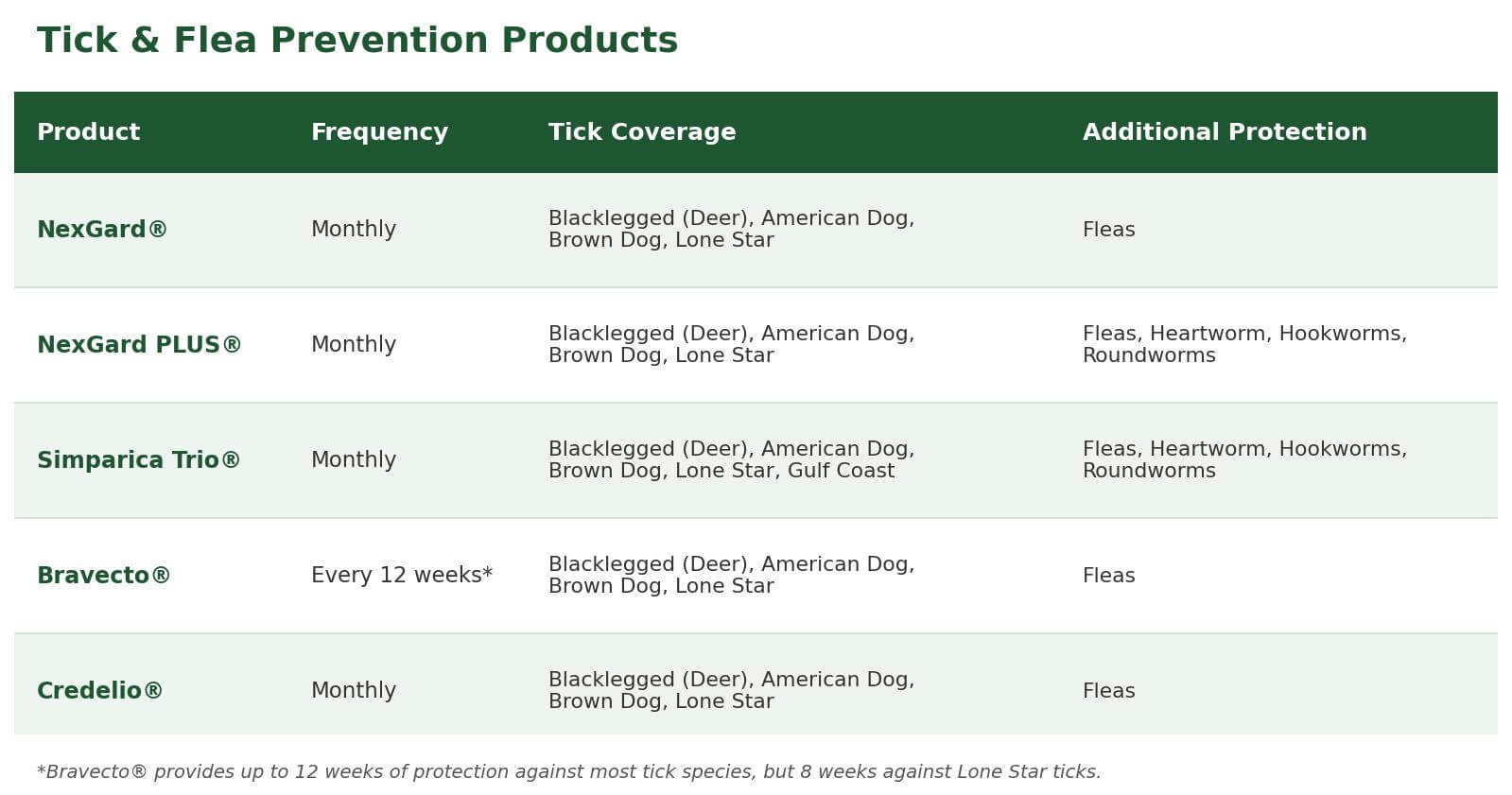
While most belong to the highly effective isoxazoline family of medications, they differ in the tick species they protect against, how long they remain effective, and whether they also provide protection against heartworms and intestinal parasites.
*Bravecto® provides up to 12 weeks of protection against most tick species but 8 weeks against Lone Star ticks.
Things Worth Knowing
Not all oral medications kill ticks at exactly the same speed. Faster kill times may reduce the opportunity for disease transmission after attachment.
Some products also combine flea, tick, heartworm, and intestinal parasite protection into one monthly chew, reducing the number of medications your dog receives.
Simparica Trio® also carries an FDA indication for helping prevent Lyme disease by killing infected blacklegged (deer) ticks before Lyme bacteria can be transmitted.
What About Seresto® Collars?
Seresto® collars work differently than oral medications.
Instead of working through the bloodstream, the active ingredients are distributed through the natural oils of your dog’s skin and coat. Ticks are exposed to those ingredients as they crawl through the coat, rather than waiting until after they have attached and begun feeding.
According to the product label, once the collar has been on your dog long enough to distribute the active ingredients, newly encountered ticks are repelled and/or killed within hours. The collar is labeled to provide up to 8 months of flea and tick protection when used according to the manufacturer’s directions.
As with any flea or tick product, individual dogs can occasionally be sensitive. Whenever I place a new collar on one of my dogs, I watch that dog closely during the first several days. If I notice anything unusual, the collar comes off and I contact my veterinarian.
Can You Combine Tick Prevention Products?
One question I hear frequently is whether it’s safe to use more than one flea and tick product.
The answer is yes—but with a plan.
Many veterinarians recommend using two complementary products for dogs with heavy tick exposure, especially hunting dogs that spend long days in thick cover. The important point is that the products should work differently, not simply add more of the same type of chemical.
For example, an oral tick preventative and a Seresto® collar work by different mechanisms and may be used together when recommended by your veterinarian.
That doesn’t mean adding a third flea or tick product automatically provides better protection. In many cases, adding unnecessary products only increases the potential for side effects without providing meaningful additional benefit.
The goal isn’t to use the most products.
The goal is to choose the right products for your dog and use them correctly.
My Tick Prevention Program
Over the years, I’ve settled on a simple routine that has worked well for my hunting dogs.
-A veterinarian-recommended oral tick preventative.
-A Seresto® collar.
-A thorough hands-on inspection after every hunt.
That’s it.
People sometimes ask why I don’t add sprays or additional products.
The answer is simple.
I grew up in agriculture and watched farmers work around chemicals every day. Those experiences left a lasting impression on me and shaped how I think about chemical exposure.
Because of that, I’ve always believed in using the least amount of chemical necessary while still providing excellent protection.
That approach has worked well for my dogs.
If you choose to use a spray instead of a collar, never spray directly toward your dog’s face or eyes. Most tick, and mosquitoes, and fly sprays warn users to avoid eye contact because serious eye injury can occur.
Instead, apply the recommended amount to a microfiber wash mitt and wipe it through the coat.
Using a mitt:
-Applies a thin, even coating instead of concentrating on the product in one area.
-Gives much better control around the eyes, nose, and mouth.
-Reduces overspray and wasted product.
-Turns the application into a hands-on health inspection where you’re also checking for ticks, burrs, cuts, sore feet, and skin irritation.
Always read and follow the product label. Some sprays require the product to dry before your dog enters the field.
The Most Important Step
No medication.
No collar.
No spray.
No product replaces putting your hands on your dog after every hunt.
Before loading my dogs into the truck, I check:
-Ears
-Neck
-Under the collar
-Chest
-Armpits
-Belly
-Groin
-Between the toes
-Around the tail
One of the handiest tools I own is a FURminator® de-shedding comb. It quickly separates the coat and helps expose ticks that might otherwise remain hidden.
Hunter’s Tick Kit
Keep these items together in your truck or dog trailer.
-FURminator® or similar de-shedding comb
-Fine-toothed tick comb
-Tick removal tool or fine-point tweezers
-Flashlight or headlamp
-Disposable nitrile gloves
-Small sealable container or bag for saving a tick if identification becomes necessary
The Real Truth About Ticks
Ticks have become a year-round reality for today’s hunters.
The good news is that protecting yourself and your hunting dog doesn’t require a complicated routine. It requires consistency.
Protect yourself before every hunt.
Protect your dog before every hunt.
Inspect both of you after every hunt.
Remove every tick as soon as you find it.
Learn which tick species and tick-borne diseases occur where you hunt.
No product is perfect.
No routine is foolproof.
But when you combine good clothing, effective preventatives, routine inspections, and prompt tick removal, you’ve dramatically improved the odds for both you and your hunting partner.
Remember These Five Rules
1.Ticks can be active during every month of the year.
2. Build your prevention program using several layers of protection.
3. Put your hands on your dog after every hunt.
4. Learn which tick-borne diseases occur where you hunt.
5. Remove every tick immediately, don’t wait.
In the woods, success often comes from paying attention to the little things. Tick prevention is no different.