How Grouse Use Pine Edges & When You Should Hunt Them
Learn Why Grouse Use Different Cover Throughout the Day
Ann Jandernoa
August 7, 2025
The border of a cut plays a critical role in evaluating the quality of the habitat. If the border is uniform all the way around meaning it has the same cover, same height, same type, then area becomes stagnant habitat. Grouse thrive on diversity, not monocultures. Without habitat variation, grouse populations can’t flourish. Knowing what surrounds a cut makes all the difference in your ability to build a plan and execute it successfully. In this article, we’ll talk about the role of pines and break them down by how grouse use them.
Pines: Safe Zones with Layers of Use
Pines are often considered safety zones. They offer protection during storms and they’re one of the first places a bird will head for concealment when they sense pressure. But not all pines are equal. Let’s break them into three main categories:
Lowland Pine Edge: The Security Zone
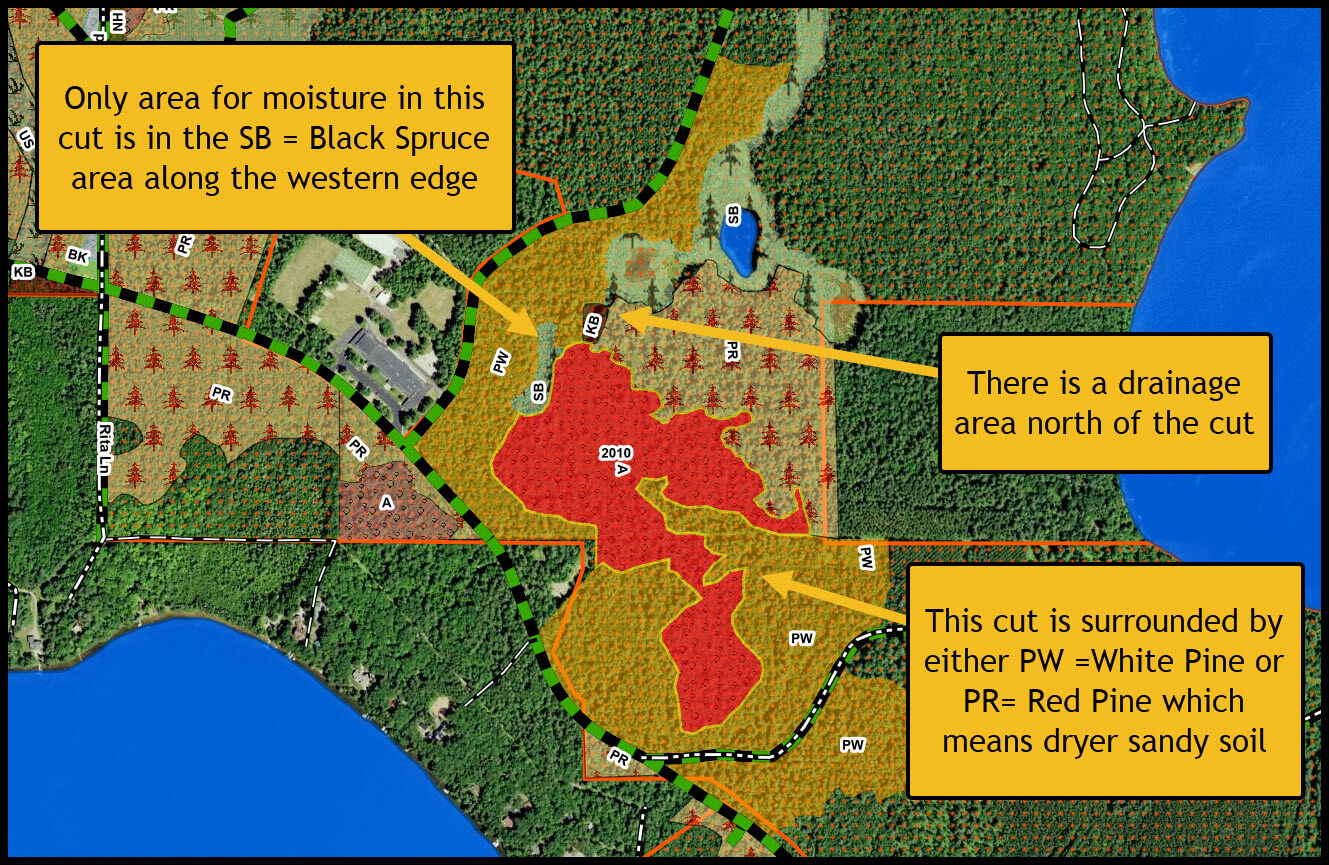
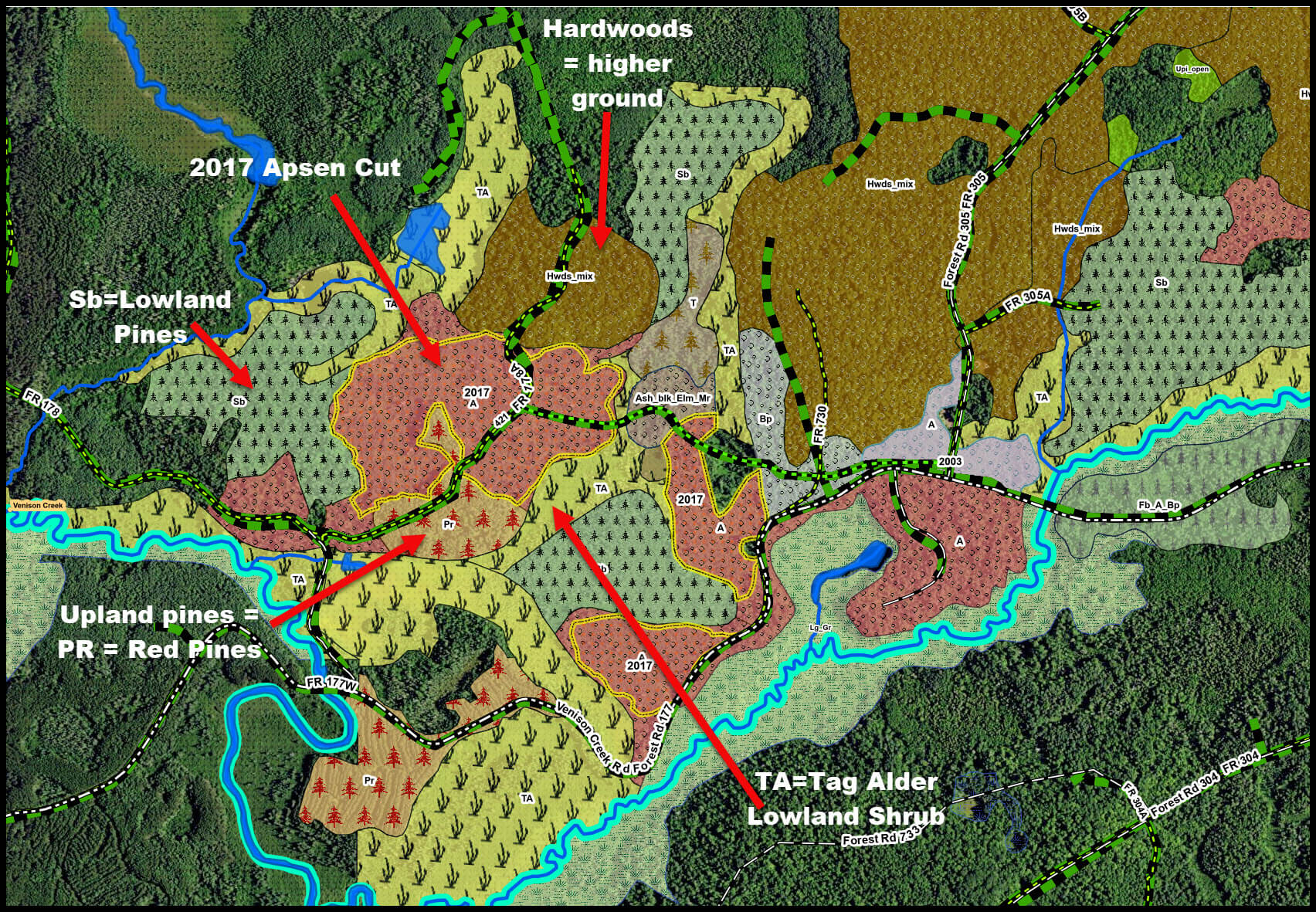
Lowland pine edges are used the most. These pines offer better stem density and structure. They typically stay drier longer, remain quieter, collect less snow, and provide excellent thermal protection. Wind blows over them, making them more stable microclimates. Grouse know this and they use these areas often, especially when pressured.
Upland Pine Edge: A Secondary Escape Route
Upland pine edges are typically used the least. These areas often consist of widely spaced pines that grow tall quickly and lack the density needed for real cover. Still, when pressured, a grouse might shift into these areas, running that edge until the opportunity presents itself to bust out and glide downhill into better habitat. They’re less secure, but they’re still part of the bird’s escape strategy.
The Downside of Pine Plantations
I am not a fan of pine plantations. When I look at these areas, all I see is monoculture habitat. Us foresters, used to joke, that any animal had to pack a lunch to travel through a Jack Pine plantation. Not to mention that the buildup of needles on the forest floor over time alters the acidity of the soil. This limits the growth of vegetation which has a long-term effect. I once hunted a cut that had white spruce plantations. This created extremely small, half-acre areas of pines. Since white spruce doesn’t grow on wet soil, these were located in well-drained spots. The only thing they did was create temporary stopover areas for pressured birds.
Internal Pines: The Icing on the Cut
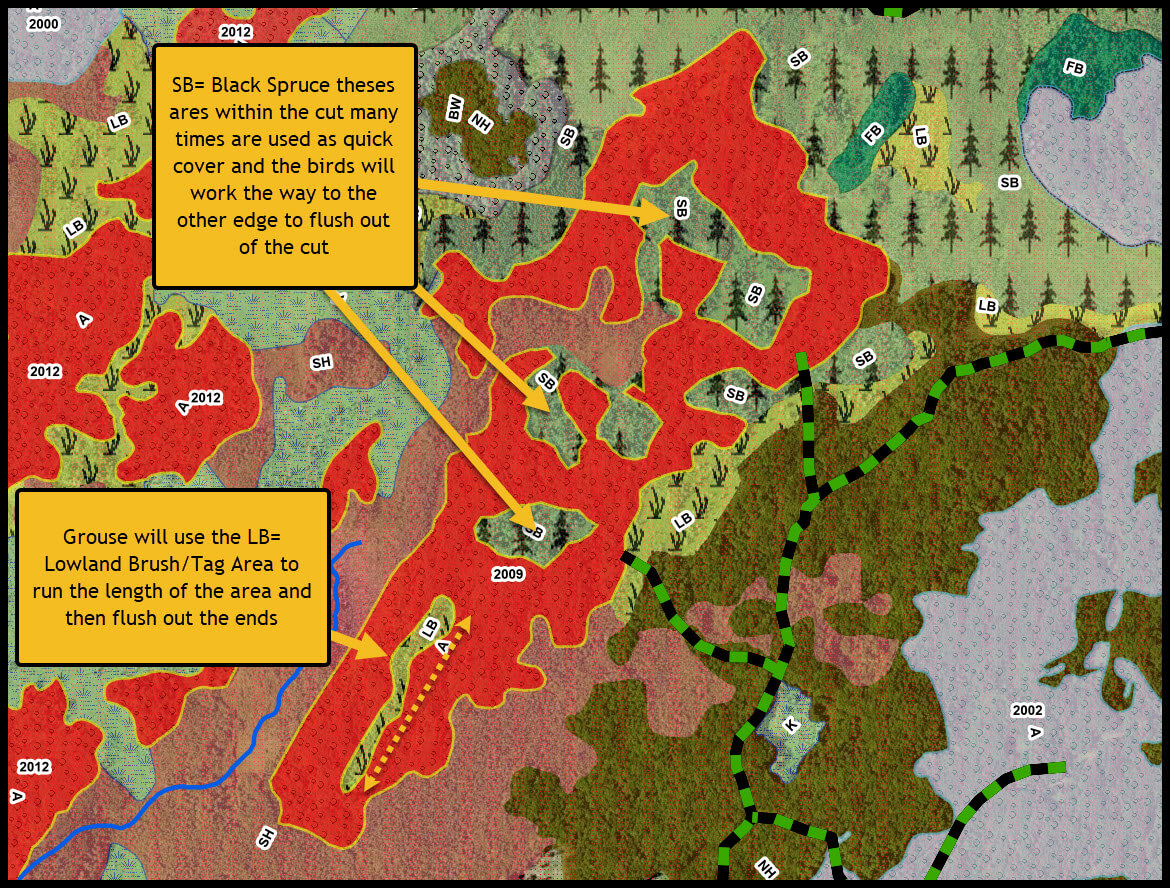
Internal pine edges within a cut are the icing on the cake. These areas often serve as loafing spots and quick escape routes. Grouse will run through these strips to stay ahead of a predator, only to bust out the back end and drop down into the safety of the lowland pine edge.
Most of the time, these internal pine patches are part of a shallow depression or a clump of Balsam fir that naturally took hold. Either way, they give grouse the ability to shift quickly into thicker cover and reassess the situation. They are quickly assessing whether to hold, run, or flush to safety.
These interior pines provide birds a tactical advantage: concealment, mobility, and transitional cover all in one. When present, they significantly enhance the value of a cut and should never be overlooked. What internal pines give back is diversity within a cut, this is a critical element.
Timing and Moisture: When to Hit the Cut
Grouse do not have a lot of oil in their feathers, wet feathers do not help in flight, so they need to stay dry. Typically, grouse move from the lowland edge pines in the morning and up into the cut. If pressured, they go back down to the pines. How long they stay near the pines in the morning is based on moisture content.
As the sun dries areas out, birds move into the cut. So, observe which side the sun warms up first. The faster it heats up; the sooner birds will adjust their timing and movement into the cover.
Whether it’s frost or heavy dew, I’ve literally had to explain to guided clients: I know where I want to be and when I want to hit that area. I’ll cast the dog in another direction for a bit because we’re 25 minutes too early, and I don’t want to waste the opportunity by hitting the area prematurely.
I’ll position us just off the edge of the pines and a little bit into the cut, where the dew has just burned off. I don’t want to let the birds run back into the pines. Timing is everything. It’s the difference between the dog picking up scent or not. Note where and how far from the pines the dog first picks up scent. That tells you how far the birds have moved.
This is strategy and it’s critical when approaching a cut for the first hunt of the day.
Final Thoughts: Timing Is Everything
In the end, you need to know what surrounds a cut. It’s critical to your decisions. Otherwise, your timing will be off. You’ll arrive too early and push birds back into dense cover, or you’ll arrive too late, and the birds will have already fed and are loafing…meaning not moving around.
Timing your hunt in relation to habitat and moisture burn-off is everything. One of the worst outcomes is pushing birds back into the pines. Grouse hunting is about strategy. And after the first two weeks of the season, young-of- the-year birds are already learning what pressure means. That learning curve makes timing and habitat analysis even more essential.